Skip to content
← All casesIT Strategy & AssessmentEnterprise

IT Strategy for Volga Shipping Company

Tech health assessment of 15+ systems across 4 aspects (0-4 score), 40+ initiatives across 5 programs, digital factory model

Problem

What doesn't work

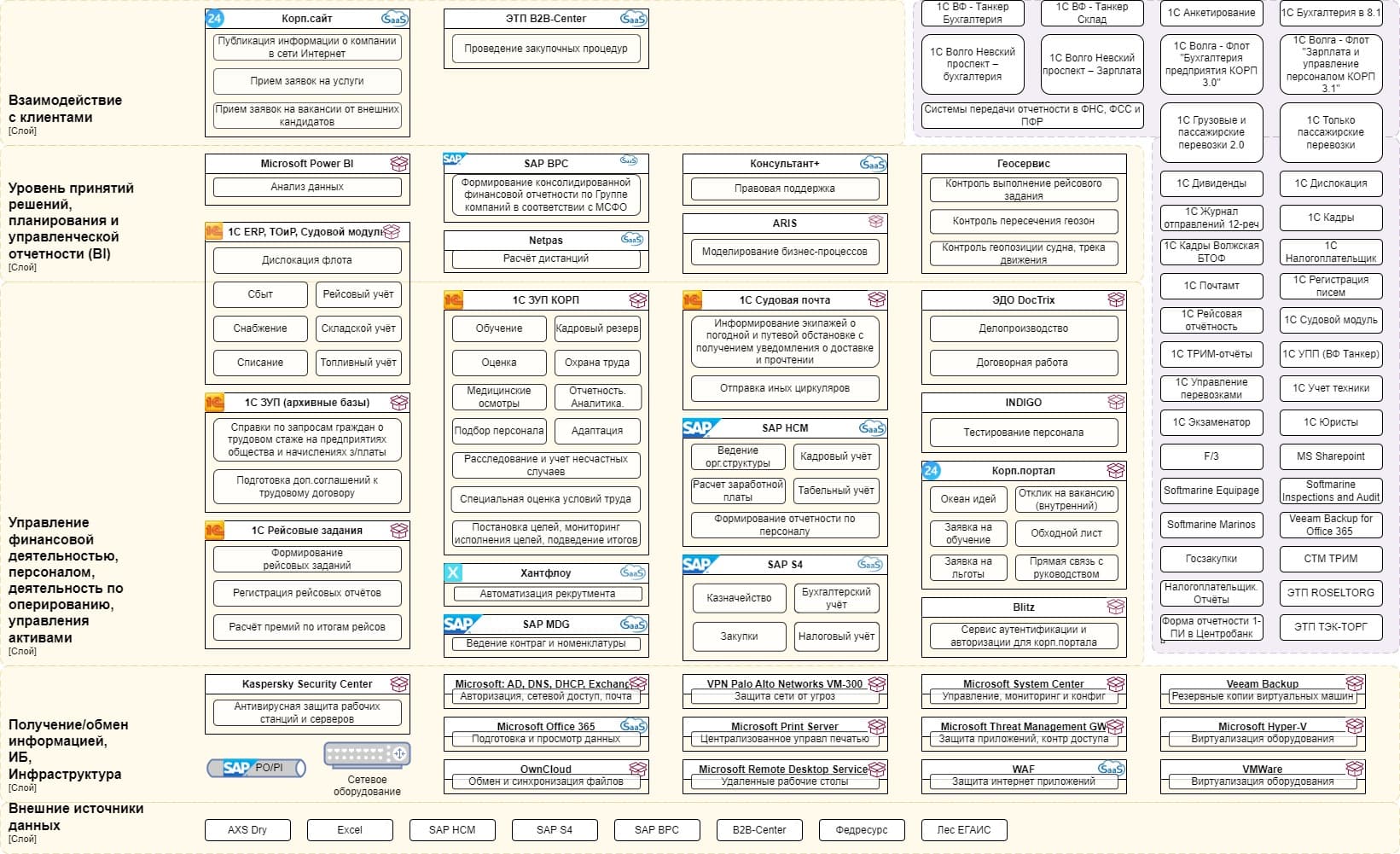
A river shipping company (subsidiary) had no IT strategy. IT landscape — a historical zoo: 1C ERP + MRO + Ship module, SAP S/4, SAP HCM, SAP BPC, GeoService, Indigo, ARIS, Power BI, and dozens more. Low functional and technical health of critical systems. Vendor lock-in, no data platform, security issues.

Solution

Architectural approach

Conducted full IT landscape technical health assessment: methodology of 4 aspects (business user survey, technical expert survey, competitor comparison, technical audit) weighted at 25% each. Criticality × Value matrix for each system. Formulated IT strategy: 40+ initiatives across 5 programs. 'Digital Factory' operating model.

Challenges

What made it hard

A subsidiary with a historical IT zoo: 15+ systems from 1C to SAP, each someone's 'favorite tool.' Technical health assessment is inherently subjective — had to formalize into a 4-aspect methodology with weights to make results reproducible. 40+ initiatives with a limited subsidiary budget — prioritization via criticality×value matrix instead of 'who shouts loudest.'

Role

My role & contribution

CTO / Technical Director

Developed the 4-aspect assessment methodology (business survey, tech audit, competitor benchmark, expert evaluation — 25% weights each). Personally assessed 15+ systems. Built criticality × value matrix. Defined 40+ initiatives across 5 programs and the 'Digital Factory' operating model.

Demo

How it looks

Screenshots

Real screenshots

Implementation

How it works

Assessment of 15+ information systems → scoring (0-4) functional and technical health → criticality × value matrix → initiative generation. 5 programs: new system selection & implementation (14 initiatives), decommissioning (4), competency centers (4), stabilization & integration architecture (12+), RUN strategy (15+). Architecture forks: EHS, integration bus, virtualization.

Architecture Decision

Why this way

Scored health assessment instead of expert opinion

Alternative

CIO expert assessment without formalized methodology

Why it didn't fit

Expert opinion: subjective, non-reproducible, doesn't convince the Board. Scored methodology: 4 aspects × 15 systems = reproducible result, visual matrix, budget justification.

Result

Objective assessment of 15+ systems. Each initiative justified by scores. Roadmap for 2-3 years

Metrics

Results

01
15+ systems assessed (functional + technical health)
02
4-aspect methodology (0-4 score, 25% weights)
03
40+ initiatives across 5 programs
04
Criticality × Value matrix per system
05
Digital Factory operating model
Business Impact

Impact on business

First IT strategy for the company — from chaotic IT to managed initiative portfolio. Prioritization: critical systems (1C ERP, SAP S/4) stabilized first. Identified vendor-lock risks, security issues (data protection compliance), missing data platform. 40+ initiatives — ready roadmap for 2-3 years.

Methods

Algorithms & patterns

IT Health Assessment (4-aspect)Criticality × Value MatrixArchitecture Fork AnalysisDigital Factory Operating ModelInitiative Portfolio (5 programs)
Stack

Technologies

  • 1С ERP
  • SAP S/4
  • SAP HCM
  • SAP BPC
  • ARIS
  • Power BI
  • Bitrix

Ready to discuss?

If you need an architect who builds autonomous AI systems — reach out.

Serbia-based · CET/CEST timezone · EU-aligned working hours · International contracts experience