Skip to content
← All casesHybrid RetrievalAI

Hybrid RAG + Knowledge Graph

3 search methods × RRF fusion — RAGAS faithfulness 0.91 on 200 questions over corporate documentation (3K+ pages)

Problem

What doesn't work

Vector search finds semantically similar documents but misses exact matches and entity relationships. Pure RAG over 3K+ page corporate documentation gives RAGAS faithfulness 0.67 — every third answer is incomplete or inaccurate.

Solution

Architectural approach

Three parallel search methods: Vector (Qdrant HNSW), BM25 (exact matches), Knowledge Graph (Neo4j, entity relationships). Results combined via Reciprocal Rank Fusion (RRF). Quality measured through RAGAS eval on 200 control questions.

Challenges

What made it hard

Entity resolution in the knowledge graph — an NLP task with no perfect solution: 'PGK', 'First Freight', and 'ПГК' must be the same node. RRF weight tuning (vector 0.4, BM25 0.3, graph 0.3) — an iterative process on 200 control questions, each iteration requiring full recalculation. Semantic chunking for code vs text — fundamentally different algorithms, AST-based chunking breaks on invalid fragments.

Role

My role & contribution

Architect & sole developer

Designed and built from scratch: Qdrant HNSW setup, Neo4j knowledge graph with entity resolution, BM25 index, RRF fusion with weight tuning. Ran RAGAS eval on 200 control questions. Deployed as internal tool for corporate documentation.

Demo

How it looks

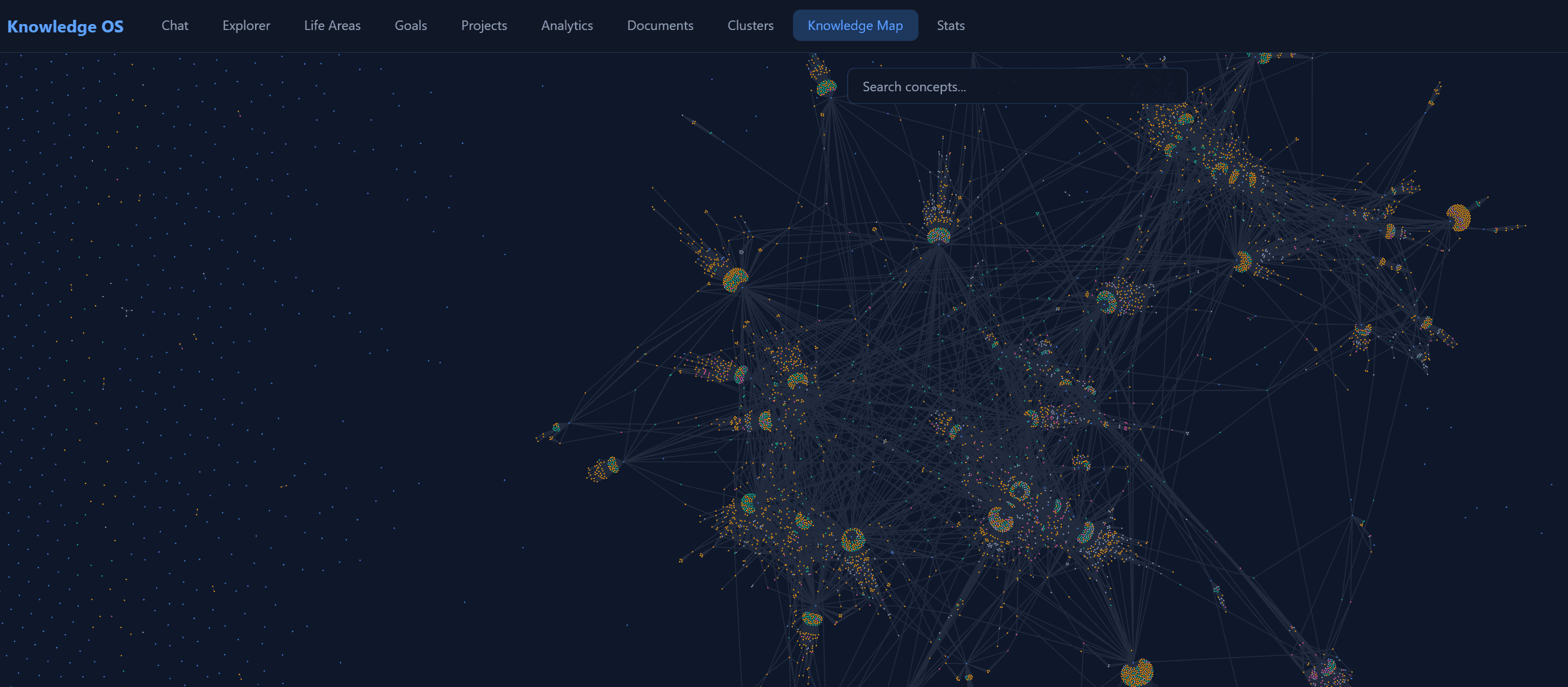
Screenshots

Real screenshots

Architecture

System architecture

QueryVector SearchQdrant HNSW12 docsBM25Keyword Index8 docsGraph TraversalNeo4j5 docs, ~2K/8KRRF Fusion0.4 / 0.3 / 0.3LLMAnswerRAGAS eval: faithfulness 0.91, MRR 0.79AI/LLMDataEval
Implementation

How it works

Semantic chunking via AST for code and paragraph-based for text. Entity extraction + resolution builds knowledge graph in Neo4j. BM25 index for keyword search. RRF aggregates rankings from three sources. RAGAS eval: faithfulness, relevancy, context precision.

Architecture Decision

Why this way

RRF fusion instead of cascade

Alternative

Cascade search: first vector, then BM25 on results, then graph

Why it didn't fit

Cascade loses documents that don't pass the first stage. RRF: each method searches independently, then rankings merge. No relevant document is lost.

Result

+25% accuracy compared to cascade approach

Metrics

Results

01
RAGAS faithfulness: 0.67 → 0.91 (on 200 control questions)
02
MRR (Mean Reciprocal Rank): 0.48 → 0.79
03
3 parallel search methods, RRF fusion with tuned weights
04
Knowledge Graph: Neo4j, ~2K entities, ~8K relationships
05
Corporate documentation: 3K+ pages
Business Impact

Impact on business

RAGAS faithfulness improvement from 0.67 to 0.91 on 200 control questions over 3K+ page corporate documentation. MRR from 0.48 to 0.79 — relevant documents consistently rank in top positions. Deployed as internal tool for corporate documentation search.

Methods

Algorithms & patterns

RAG (Vector + BM25 + Graph)Reciprocal Rank FusionKnowledge Graph (Neo4j)Entity ResolutionSemantic Chunking (AST)RAGAS evalQdrant HNSW
Stack

Technologies

  • Python
  • Qdrant
  • Neo4j
  • Sentence-Transformers
  • RAGAS
  • FastAPI

Ready to discuss?

If you need an architect who builds autonomous AI systems — reach out.

Serbia-based · CET/CEST timezone · EU-aligned working hours · International contracts experience